




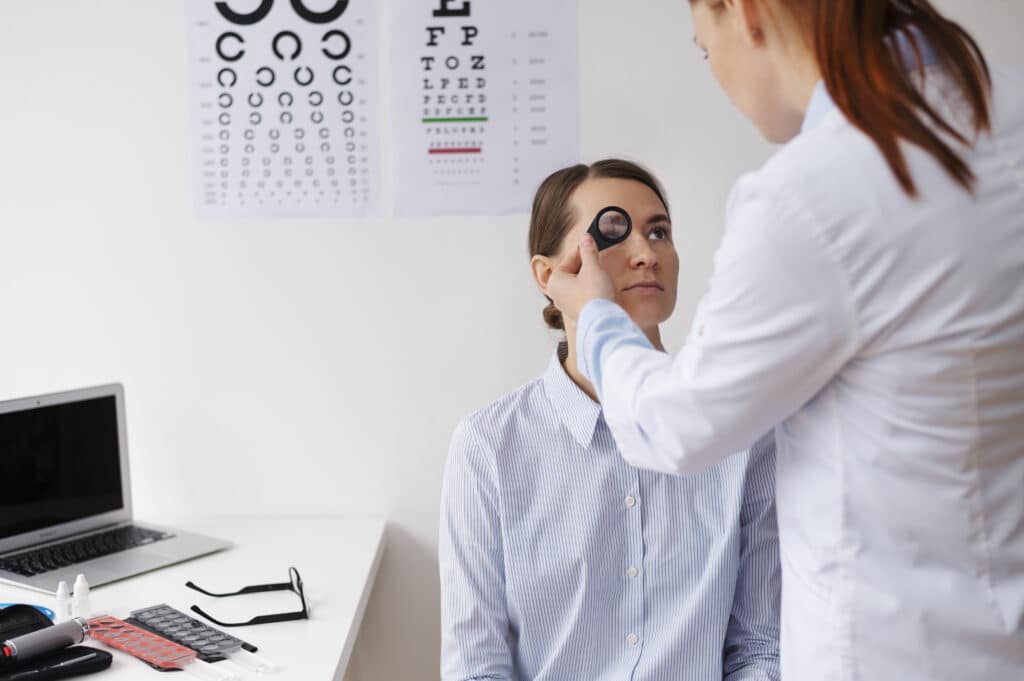
If you have not had a comprehensive eye exam this year, August is a good time to schedule one. National Eye Exam Month highlights the importance of regular eye health checks, even when your vision seems normal. A comprehensive exam checks more than your glasses prescription. It evaluates your eyes for signs of conditions such as glaucoma, cataracts, diabetic eye disease, and macular degeneration. The right exam schedule depends on your age, eye health, and risk factors.
Quick Takeaways
- Eye exams: Comprehensive exams evaluate vision and overall eye health.
- Warning signs: Blurry vision, double vision, new floaters, flashes, or eye discomfort require an eye evaluation.
- Risk factors: Age, diabetes, high blood pressure, and a family history of glaucoma can affect how often you need exams.
- What to expect: Testing can include visual acuity, eye pressure, peripheral vision, slit-lamp examination, and dilation.
- Next step: If you have not had an exam this year, schedule a comprehensive eye exam with Eye Care of San Diego.
Why San Diego Patients Should Keep Up With Eye Exams
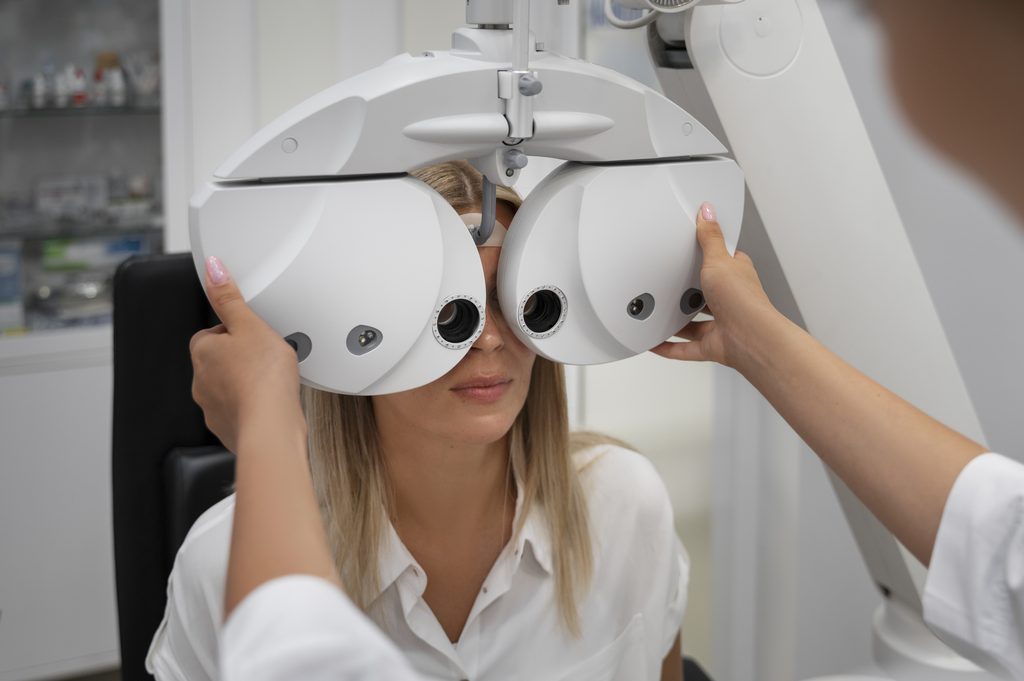
It is easy to delay an eye exam when you can still see clearly. At Eye Care of San Diego, patients frequently ask whether they still need an exam when their vision has not changed. The answer is yes: some eye diseases develop before noticeable vision changes occur. The National Eye Institute recommends comprehensive dilated exams based on individual risk factors and age.
A comprehensive eye exam can include eye pressure testing, retinal evaluation, peripheral vision testing, and dilation. These tests help the clinical team identify changes that require monitoring or additional evaluation.
If you are experiencing new vision changes in San Diego, Eye Care of San Diego provides comprehensive eye exams at locations serving Mission Hills, La Jolla, and Sorrento Valley.
What Happens During a Comprehensive Eye Exam?
Your appointment starts with a review of your vision, health history, medications, and any symptoms. Testing can include visual acuity, refraction, eye pressure, peripheral vision, slit-lamp examination, and dilation when appropriate.
The clinical team at Eye Care of San Diego can also use the findings from your exam to determine whether you need routine monitoring or further evaluation for conditions such as cataracts, glaucoma, dry eye, or macular degeneration.
Schedule Your San Diego Eye Exam
If you have not had your eye exam this year, Eye Care of San Diego can help you establish the right care schedule based on your individual needs. Schedule an appointment online or call (800) 765-2737.
Eye Exam Frequently Asked Questions
Q: Do I need an eye exam if I can see clearly?
A: Yes. Some eye diseases can develop without noticeable symptoms. A comprehensive eye exam allows an eye care professional to evaluate both vision and eye health.
Q: How often should I have an eye exam?
A: The right schedule depends on your age, eye health, family history, and other risk factors. People over 60 and people with certain risk factors often need exams every one to two years or more often when recommended by their eye doctor.
Q: What symptoms mean I should schedule an eye exam?
A: Blurry or double vision, new floaters, flashes, or persistent eye discomfort warrant an eye evaluation. Sudden vision loss or severe eye pain requires prompt medical attention.
Q: Where can I get a comprehensive eye exam in San Diego?
A: Eye Care of San Diego provides comprehensive eye care through locations serving Mission Hills, La Jolla, Sorrento Valley, and Escondido.
Your Next Step for Eye Care in San Diego
August is National Eye Exam Month, making it a timely reminder to check when you last had a comprehensive eye exam. If you are due for an appointment, Eye Care of San Diego offers comprehensive eye care for patients throughout San Diego County.
Call Eye Care of San Diego at (800) 765-2737 to schedule.