




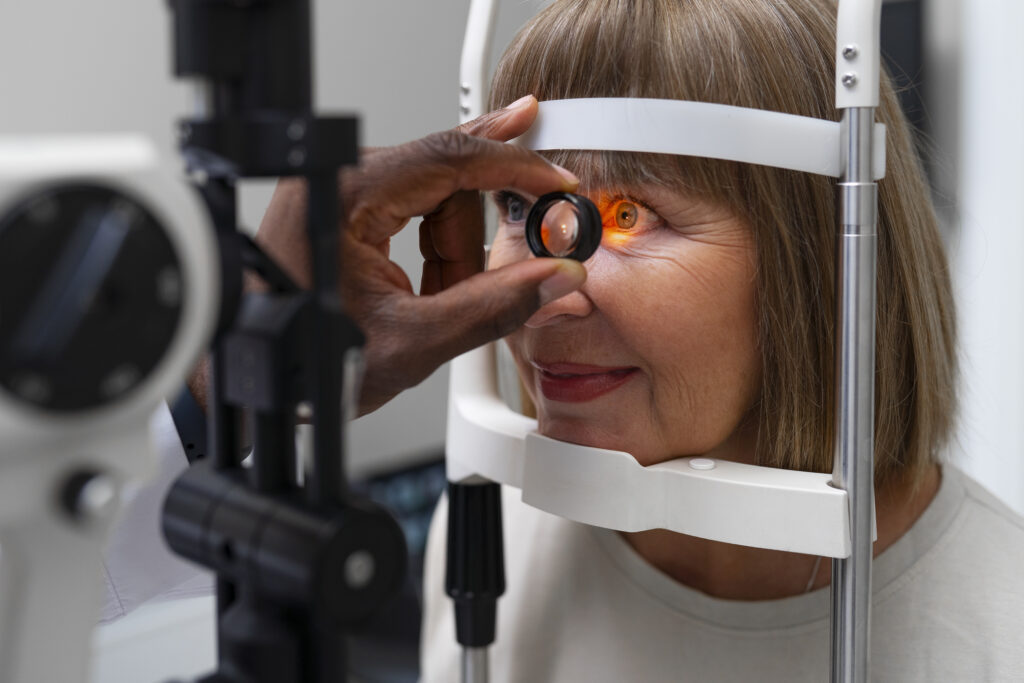
Glaucoma damages the optic nerve and can lead to permanent vision loss if left untreated. Many people do not notice symptoms early because glaucoma often develops slowly and painlessly. If you have changes in side vision, a family history of glaucoma, diabetes, or increasing trouble seeing at night, you should schedule a comprehensive eye exam. Early detection helps protect long-term vision.
Quick Takeaways
- Glaucoma damages the optic nerve, often without early symptoms.
- Loss of side vision is a common warning sign.
- Family history and diabetes increase glaucoma risk.
- Sudden eye pain or halos around lights need urgent care.
- Comprehensive eye exams help detect glaucoma early.
Should You Worry About Glaucoma Symptoms?
Ask yourself these five important questions:
- Have You Lost Side Vision?
Glaucoma often affects peripheral vision first. Many patients notice trouble driving, bumping into objects, or missing movement beside them.
- Does Glaucoma Run in Your Family?
Family history strongly increases glaucoma risk. According to the American Academy of Ophthalmology, people with a parent or sibling diagnosed with glaucoma need regular screenings.
- Do You Have Diabetes or High Blood Pressure?
These conditions affect blood flow to the optic nerve and increase the risk of glaucoma progression over time.
- Have You Experienced Eye Pain or Halos Around Lights?
Sudden eye pain, blurry vision, nausea, or rainbow halos around lights may signal angle-closure glaucoma, a medical emergency that requires immediate treatment.
- Have You Skipped Eye Exams?
Glaucoma often develops silently. Comprehensive eye exams help ophthalmologists detect optic nerve damage before vision loss becomes severe.
Dr. Catherine Sheils explains, “Many patients feel their vision is normal until glaucoma has already caused damage. Routine eye exams allow us to detect problems earlier and begin treatment promptly.”
How Do Eye Doctors Check for Glaucoma?
A glaucoma evaluation may include:
- Eye pressure testing
- Optic nerve imaging
- Peripheral vision testing
- Dilated eye examination
According to the National Eye Institute, glaucoma can develop even when eye pressure appears normal, which is why complete testing matters.
Eye Care of San Diego provides glaucoma evaluations for patients throughout Mission Hills, La Jolla, Sorrento Valley, and Escondido.
If you are noticing changes in your vision or have glaucoma risk factors, schedule a comprehensive eye exam at or call (800) 765-2737.
FAQ
Q: Can glaucoma cause blindness?
Yes. Untreated glaucoma can cause permanent vision loss, but early detection and treatment help slow progression.
Q: Does glaucoma always cause symptoms?
No. Many people with early glaucoma notice no symptoms until vision damage has already occurred.
Q: What age should glaucoma screenings begin?
Adults over 40 should have regular comprehensive eye exams, especially if they have family history or diabetes.