




If you’re looking for a long-term vision correction option that offers exceptional clarity and freedom from glasses or traditional contact lenses, Implantable Contact Lenses (ICLs) may be worth considering. ICLs are an advanced solution designed for people who want sharp, reliable vision without permanently reshaping the cornea. They are especially beneficial for patients who may not qualify for LASIK or other laser vision correction procedures.
This guide explains what Implantable Contact Lenses are, their benefits, who makes a good candidate, the recommended age range, and how a comprehensive eye exam can help determine if ICL is right for you.
What Are Implantable Contact Lenses?
Implantable Contact Lenses are thin, flexible lenses made from a biocompatible material called Collamer. Unlike traditional contact lenses that sit on the surface of the eye, ICLs are surgically placed inside the eye, behind the iris and in front of the natural lens.
Because of their placement:
- They are not visible to others
- You cannot feel them once implanted
- They move naturally with your eye
- They provide stable, high-quality vision
ICLs do not replace your natural lens. Instead, they work in harmony with it to correct refractive errors, primarily nearsightedness, by improving how light is focused onto the retina.
Benefits of Implantable Contact Lenses
ICLs offer several advantages that make them an appealing option for many patients:
- Superior Vision Quality – Many patients experience sharp, high-definition vision that is often equal to or better than what they achieved with glasses or contact lenses.
- Ideal for Thin or Irregular Corneas – Because ICLs do not involve reshaping the cornea, they are an excellent alternative for patients who are not candidates for LASIK or PRK due to thin corneas or corneal irregularities.
- Reversible Procedure – Unlike laser vision correction, ICLs can be removed or replaced if your vision needs change in the future. This flexibility provides peace of mind for many patients.
- Built-In UV Protection – The Collamer material naturally blocks harmful ultraviolet (UV) rays, offering an added layer of protection for long-term eye health.
- Reduced Risk of Dry Eye – Since the corneal surface is not altered, ICLs are less likely to worsen dry eye symptoms, making them a suitable option for patients with pre-existing dryness.
What is the Ideal Age Range for ICL?
Most candidates for Implantable Contact Lenses fall within the 21 to 45 age range. This is because:
- Vision prescriptions are typically stable after age 21
- The natural lens remains clear before age-related changes, such as cataracts, become more common
Patients outside this range may still qualify, but additional factors must be carefully evaluated during an eye exam.
Who Is a Good Candidate for ICL?
You may be a strong candidate for Implantable Contact Lenses if you meet the following criteria:
- Moderate to severe nearsightedness
- Stable vision prescription for at least one year
- Healthy eyes with no uncontrolled eye diseases
- Adequate anterior chamber depth (space inside the eye)
- Not a good candidate for LASIK or other laser procedures
ICLs are especially beneficial for patients who have been told they are not eligible for laser vision correction due to thin corneas, dry eye syndrome, or high prescriptions.
How to Know If You Are Suited for ICL
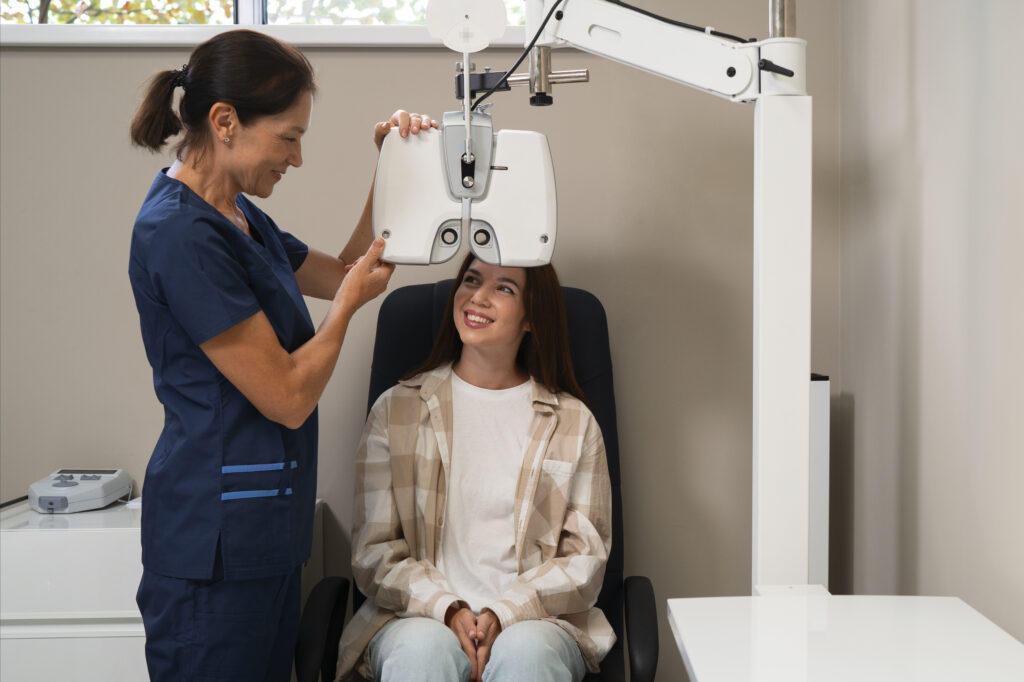
The most reliable way to determine whether ICL is right for you is through a comprehensive eye exam. During this evaluation, your eye doctor will assess:
- Vision and Prescription Stability – To ensure your refractive error can be effectively corrected with ICL.
- Corneal Health and Measurements – Although the cornea is not altered, its health and shape are still important for overall eye safety.
- Anterior Chamber Depth – This measurement ensures there is enough room in the eye to safely place the lens.
- Eye Pressure and Overall Eye Health – Screening for conditions such as glaucoma or inflammation helps ensure long-term success. Based on these findings, your eye care provider can determine whether ICL is a safe and effective option for your vision needs.
Effects of ICL on the Eyes
Implantable Contact Lenses are designed to work naturally within the eye. When placed by an experienced surgeon, they offer predictable and long-lasting results.
Short-term effects after the procedure may include mild light sensitivity, temporary blurriness, or slight eye pressure, which typically resolve within a few days. Long-term, patients often experience stable vision, reduced dependence on corrective lenses, and improved visual comfort.
Schedule a Comprehensive Eye Exam
If you’re considering Implantable Contact Lenses, the first and most important step is a thorough eye evaluation. The experienced team at Eye Care of San Diego can help determine whether ICL is the right vision correction solution for you and guide you toward the best option for your long-term eye health.
Call (800) 765-2737 to schedule a comprehensive eye exam today and take the next step toward clearer, more confident vision.